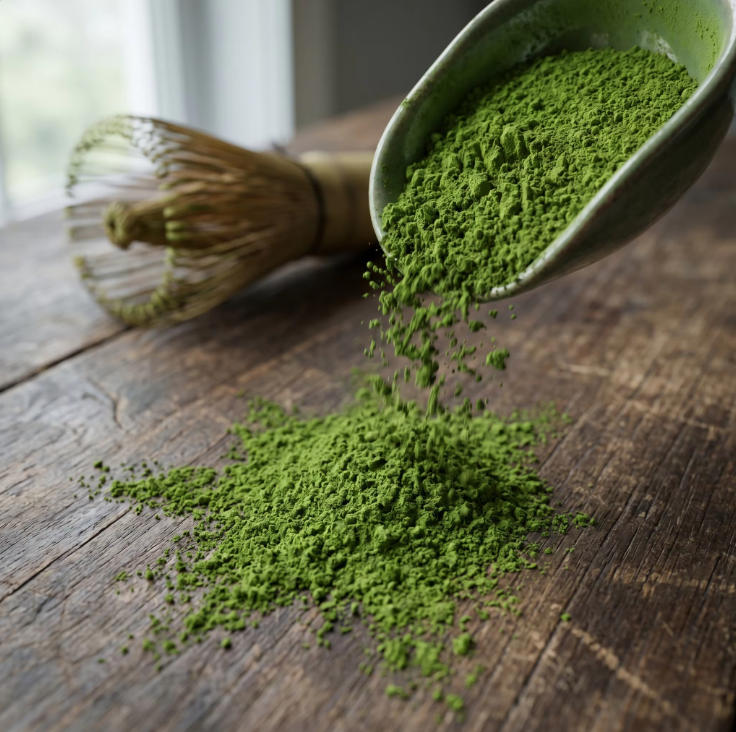
When the world thinks of matcha, Japan often comes to mind first. Yet few realize that matcha—finely ground powdered green tea—originated in China during the Tang Dynasty (618–907 AD), when tea leaves were steamed, dried, and ground into bricks. The Zen Buddhist monks later introduced this method to Japan, where it evolved into the ceremonial tradition we know today.
So where does China stand in today's global matcha landscape? The answer is complex and rapidly changing.
Production Powerhouse: China is now the world's largest producer of green tea, and matcha is no exception. Regions like Zhejiang, Guizhou, and Sichuan have invested heavily in shade-growing techniques (covering tea plants weeks before harvest to boost chlorophyll and L-theanine), producing vast quantities of matcha at competitive prices. In fact, China supplies a significant portion of the world's culinary-grade matcha—the type used in lattes, ice cream, and baked goods.
Quality Gap: However, when it comes to premium ceremonial-grade matcha, Japan still holds the gold standard. Japanese matcha from Uji, Nishio, and Shizuoka is prized for its vibrant jade color, umami richness, and silky texture—attributes achieved through centuries of refined processing. Chinese matcha, while improving rapidly, often has a slightly more bitter, astringent profile due to differences in cultivar selection and stone-grinding techniques.
Rising Ambition: China is now closing that gap. Domestic brands are adopting Japanese-style shading and milling, while leveraging China's vast tea heritage to market "authentic" Song Dynasty–inspired matcha. With the global matcha market projected to exceed $5 billion by 2027, China is positioning itself not as a cheap substitute, but as a legitimate, large-scale producer that can meet both volume and quality demands.
Conclusion: China is the world's matcha factory—not yet its luxury boutique, but evolving fast. While Japan remains the prestige leader, China's scale, low cost, and growing expertise make it an indispensable force. The future of matcha may not belong to one nation, but to a global fusion where China's ancient roots and modern capacity finally get the recognition they deserve.